Home > By Location > Tips for Driving in Poland

Tips for Driving in Poland

Author: Tracy Whitelaw - Updated: 23 October 2010 | Comment
 
Tips For Driving In Poland

Poland is a beautiful country in parts and is fairly easily accessible by car from the UK. However, it unfortunately has a fairly high number of road deaths – around 14.3 per 100,000 of population in comparison to only 5.5 per 100,000 of population in the UK. Poland also has some of the worst roads, largest number of low skill drivers and high number of car thefts in Europe. It isn’t a perfect place to take your own car and you should be aware of this before heading there. This means that you must be extremely alert and educated about driving there, so it’s important to learn as much as you can before you go.

Essential Tips for Driving in Poland

In order to drive legally in Poland you must have your full UK licence. The modern EC format pink or green licence is acceptable in Poland, but if you only have an old style paper licence you must ensure that you also have an International Driving Licence with you. Always remember to drive on the right hand side in Poland and of course overtake on the left. It is illegal to use your mobile phone while driving in Poland, unless you’re using a hands free kit.

Seatbelts are obligatory and should be worn by all front seat passengers. If they’re fitted in the back, they should also be worn there. Children aren’t allowed to sit in the front of the car if they are under the age of 10 and you can be given a fine if you break this rule. There are rules against using your horn in Poland, so try to avoid it at all times – it’s actually illegal. If you must give a warning to another driver, you should use your headlights to flash another driver to let them know you’re passing. You can use your horn in poor visibility to make others aware of your presence, but only at this time.

As a visitor to Poland, keep your registration papers, insurance document and driving licence safe and have it on your person if you’re in the car. The high number of car thefts in Poland mean that it’s not safe to leave your valuable documents in the car, so keep them on your person.

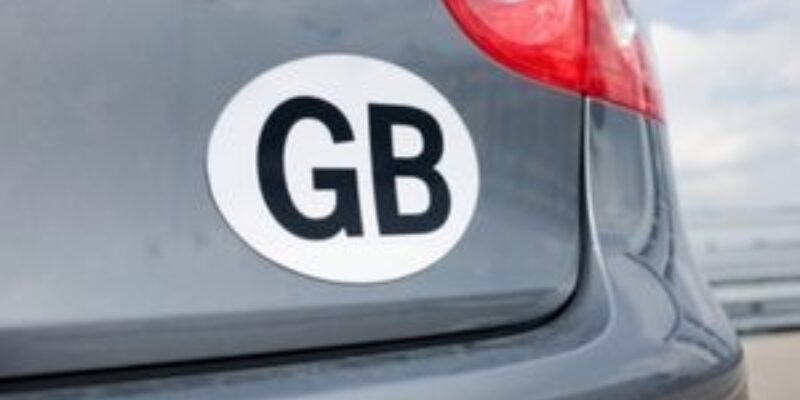
If you’re taking your own car with UK plates, be wary about where you leave it in Poland. Many car hire companies outside of the country won’t allow their cars to enter due to the high possibility of theft or break-in, so keep this in mind when you’re taking your own car.

Speeding Laws in Poland

There are strict speeding limits in Poland that should be adhered to at all times. If you’re a foreign national driving there and are caught speeding, you’ll still have to pay the fine and could suffer more dire consequences if you’re speeding over a certain limit. Although it may seem at times like local drivers have no regard for the speed limit, try not to fall into the same pattern as you may end up in an accident or worse. The general speed limits are:

  • Expressways – 110 km/h or 130 km/h dependent on area
  • Outside Built Up Areas – 90 km/h
  • Built-up Areas – 50 km/h or 60 km/h dependent on area

The drink driving limit in Poland is strictly enforced and they take a zero tolerance approach to drink driving. If you have taken even one unit of alcohol then you are putting yourself at risk of being charged for drink driving. Police will often carry out on the spot breath tests and you will need to pay an on the spot fine in Polish currency if you’re found guilty.

Road Rules in Poland

Polish driving laws are strict, but that doesn’t mean that local drivers are always going to abide by them. The roads are generally of a fairly poor quality and junctions and crossroads are often not marked with stop lines. Roundabouts can be difficult to spot as they’re not actually round, so many drivers just continue through as though they weren’t there. There are also some other important Polish road tips to consider before driving there:

  • Be aware of people overtaking in the face of oncoming traffic
  • Watch for people who red light jump – many drivers in Poland only stop at a red light if there’s another vehicle obstructing your path or you’re likely to get caught
  • Don’t assume that drivers will stop at a zebra crossing. Although you’re meant to, many Polish drivers don’t stop unless someone is on the middle of the crossing
  • Watch out for tailgaters. Try to keep a good distance between yourself and other cars
  • Most petrol stations are open 24 hours and have both leaded and unleaded petrol
  • You may pass trams on the right, but if it’s stopped and passengers are disembarking, you must yield to them
  • Watch out for horse drawn vehicles, especially in the harvest months
  • Traffic signals are often ignored and indication on direction is rarely given
  • Headlights should be on at all times, even during the day.

You might also like...

Comments...

Back to the car thefts- I meant late 90s, early naughties.
axelsjoblom - 21 August 2011 @ 12:22 PM
I've lived in Poland for the past 3 years, have driven about 50,000 kilometres on Polish roads and I would like to make some remarks - I've seen a horse drawn cart only once, and believe me, I've traveled some remote and very rural locations - indicators are quite often not used when changing lanes, otherwise they're used almost always- in fact I think they're used more often than in UK - never seen a situation with red light described above; of course some people jump red light, but it happens everywhere - thefts were a problem till early 90's; now it's almost non existent - alcohol limit is 0.2 but is widely disregarded (no wonder why- it's way too low) The rest of the article is mostly true.
axelsjoblom - 21 August 2011 @ 12:19 PM
Was thinking of driving my motorhome to poland for a visit. It all sounds doom and gloom.
4star - 3 April 2011 @ 8:43 PM
Leave a Comment or Ask a Question...
Title:
(never shown)
Firstname:
(never shown)
Surname:
(never shown)
Email:
(never shown)
Nickname:
(shown)
Comment:
Validate:
Enter word:
Our Quick Links...
Also on About Driving Abroad...
Our Most Popular...
Add to my Yahoo!
Add to Google
Stumble this
Add to Twitter
Add To Facebook
RSS feed
You should seek independent professional advice before acting upon any information on the AboutDrivingAbroad website. Please read our Disclaimer.